
Podcaster Profiles: Sam Sethi -- TrueFans & Podnews Weekly Review
ALSO...Arielle Nissenblatt on Podcast Cover Art & Podsy uses Archived Episodes.

Podcaster Profiles: Sam Sethi — TrueFans & Podnews Weekly Review
As a podcaster or podcast fan, you may not know the name Sam Sethi. But you should, because he’s one of the most influential people in podcasting. Let me tell you more about Sam Sethi.
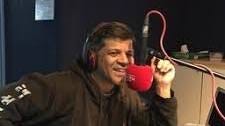
Sam Sethi is a well-known tech entrepreneur, award-winning radio presenter, and a prominent figure in the global podcasting industry. He is best recognized as the co-host and producer of the Podnews Weekly Review alongside James Cridland, and the CEO and founder of TrueFans, a direct-to-fan podcast monetization and engagement platform.
I think a quote from U.S. President Franklin D. Roosevelt sums up Sam Sethi’s outlook and output. “There are many ways of going forward, and only one way of standing still.”
Mr. Sethi boasts a 25-plus-year career in the tech and internet industries. He previously held senior marketing and engineering roles at major companies like Microsoft, Netscape, Gateway Computers, and MicroStrategy. Moreover, he successfully built and sold three startups and launched TechCrunch Europe. He is the Managing Director of River Radio and has hosted several shows, including Sam Talks Technology.

On his LinkedIn profile, this is his handle — #Maverick #Host #Producer #Director #Guest #Editor #Co-Host #CEO #Audio Editor — reflecting the numerous roles he has played in the industry. Last year, Sam Sethi and James Cridland won an Ear Worthy Award for Podnews Weekly Review.
Sam lives in Berkshire, London. Sam is talented enough in our estimation to be U.K. Prime Minister (A job that may be opening up) or manager of the EPL football team, Chelsea FC.
Sam Sethi has been the co-host of the Podnews Weekly Review for about three and a half years. He joined James Cridland on the podcast in November 2022 when the show transitioned from Podland to the Podnews Weekly Review. The podcast is widely regarded as a must-listen resource for podcast creators, executives, tech developers, and network leaders.
The hosts frequently interview top executives from major platforms — including Apple, Spotify, and Amazon — as well as leading figures in podcast monetization and technology. The show is known for scrutinizing platform metrics, RSS feed changes, AI integration, and advertising trends, keeping major corporations accountable. The show frequently records live at major industry gatherings, such as The Podcast Show in London, anchoring its status as a premier source for industry discourse. In April, James Cridland and Sam had an episode in which they tracked the money moving into paid podcast subscriptions as Patreon reported record creator earnings, then followed the ripple effects across platforms, hosting, and video.
Recent episodes of note include one called “Fixing podcasting’s AI slop and spam problem,” in which Sam talks with Alberto Betella from RSS.com about these problems. As supporters of indie podcasting and global podcasters, the hosts released an episode with Kattie Laur, exploring Canada’s podcast identity, the CBC effect, and why discovery and funding — not mandates — unlock local growth.
On numerous podcasts and in articles, TrueFans.fm founder Sam Sethi has been forward-thinking about podcasting. Sam has explained how True Fans grew out of the podcasting 2.0 movement into a full creator marketplace where podcasters can host audio and video, build real fan communities, and earn through value-for-value models, including micropayments, subscriptions, and one-off episode payments.
Sam has developed an entire podcasting ecosystem with TrueFans.
Sam says: “True Fans removes friction for listeners with a built-in virtual wallet, gamified SATs, and simple top-ups using Stripe, Apple Pay, and Google Pay, while handling all the complex bits in the background. On the hosting side, we dig into why downloads are a broken metric and how True Fans uses streaming and six-second packets to deliver rich consumption analytics.”
Recent innovations, just developed or coming soon, include live-streaming, co-listening, chat, creator portals, custom domains, and AI/voice interfaces that aim to give creators more control than Apple, Spotify, or YouTube.

“TrueFans is one of the most exciting innovations in podcasting,” says Claire Waite Brown, the new Head Of Community for TrueFans.
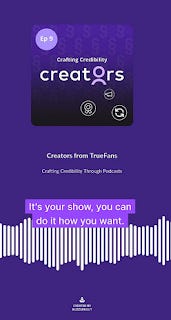
Hosted by Sam Sethi and Claire Waite Brown, Creators by TrueFans is a podcast from TrueFans.fm that spotlights independent podcast creators and music artists, offering them increased visibility and a platform to connect with their fans. The weekly show features a new creator, discusses platform updates for monetization and discovery, and explores trends in the podcasting and music industries. Listeners can support the podcast through micropayments called SATs, leave feedback via SuperComments, and engage with hosts on social media.
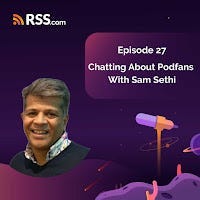
As I’ve said before, influence is not the same as influential. Spotify Chairman Daniel Elk has influence. Sam Sethi is influential. There’s a quote by Steve Jobs, Apple founder, that exemplifies Sam Sethi’s influence.
“Here’s to the crazy ones, the misfits, the rebels, the troublemakers, the round pegs in the square holes… they push the human race forward, and while some may see them as the crazy ones, we see genius, because the ones who are crazy enough to think that they can change the world, are the ones who do.”
Podcast Cover Art Is More Important Than You Think by Arielle Nissenblatt
Read this important article about how podcast cover art affects perceptions, usage, and visibility of a podcast. I do about 250 podcast reviews a year, so I see 250 images of podcast cover art. I agree with Arielle wholeheartedly. Check out her examples. I find cover art with people (usually the host) on the cover because neuroscience says that humans have a robust response to images of other humans.
Podsy — Indie podcasts should not be evaluated solely on the number of downloads
Podsy turns a back catalogue into a structured listener environment called a Podcast Club.
A Podcast Club is a six-week, episode-anchored space the podcaster runs alongside their show. One episode per week. Six episodes total. The podcaster chooses the six from their existing back catalogue, or records new ones specifically for the Club, or mixes both.
Podsy founder Kevin Redmond explains: “Each week, the platform analyses the episode and generates a discussion prompt for the group and a set of private actionable insights for each listener. The podcaster reviews and edits before anything goes live. The AI does the heavy lifting. The podcaster applies the judgment.”
THE WEEKLY RHYTHM
One episode anchors the week. Either new, curated from the back catalogue, or recorded specifically for the Club.
One discussion prompt opens a thread the listeners can engage with at their own pace.
A set of private actionable insights gives the listener something to try independently between episodes. Nothing is visible to other members unless the listener chooses to share it.
Every previous week stays open. Listeners are never behind. They can drop into any week and the conversation is still live.
From day one, the listener and the podcaster can move from the public thread into a private one-to-one conversation inside the platform.
Three outcomes the Club is designed to produce
Not every Club produces every outcome. A well-run Club should always produce the last two.
OUTCOME ONE: A WARM LEAD OR A REVENUE EVENT
A listener becomes a direct commercial opportunity. Attributable to the Club. Undeniable when it happens.
OUTCOME TWO: AUDIENCE INTELLIGENCE
The podcaster discovers something specific about the people listening to their show that they could not have learned from any other source. Sometimes that reframes the show. Sometimes it reframes the offer. Sometimes it confirms the podcaster has been guessing wrong about who they are talking to.
OUTCOME THREE: LISTENER ACTIVATION
Anonymous listeners become visible people. The host has names. The host has context. The relationship moves from broadcast to conversation. The download count stops being a proxy for the audience and starts being a footnote underneath it.
Who this is built for, and who it is not.
Podsy is deliberately scoped. The platform is built for podcasters who treat the show as a commercial channel and have a specific offer they can present to a warm lead today. That is the qualifying line. Everything sits on top of it.
It is built for
Founder-podcasters and expert-led podcasters who use the show to attract clients, build authority, or generate commercial conversations.
Consultants, coaches, trainers, advisors, and operators with a clear offer at a clear price.
Indie podcasters who have invested years in the show and are tired of judging that effort by a download count that does not move in proportion to the work.
It is not built for
Media-scale shows whose business model is advertising. Downloads work fine for them. Resonance is interesting, but not necessary.
Hobbyists. Podsy adds work, structure, and intent. It is the opposite of a side project.
Podcasters whose show is purely creative. No offer, no commercial intent, no plan to convert anything. They will get nothing out of this that a Discord could not give them more cheaply.
The qualifying gate is not the size of the audience. Some of the best-fitting podcasters Podsy has spoken to have a few hundred regular listeners. The gate is whether the show is a pipeline or whether the show is the point.
All of this is so true!
Sam is also one of the best friends I’ve ever had.