
Science Magazine Podcast: Advancing Science, Engineering & Innovation
ALSO...The Food Institute Acquires Heritage Radio Network's Food & Beverage Podcast Assets

Science Magazine Podcast: Advancing Science, Engineering & Innovation
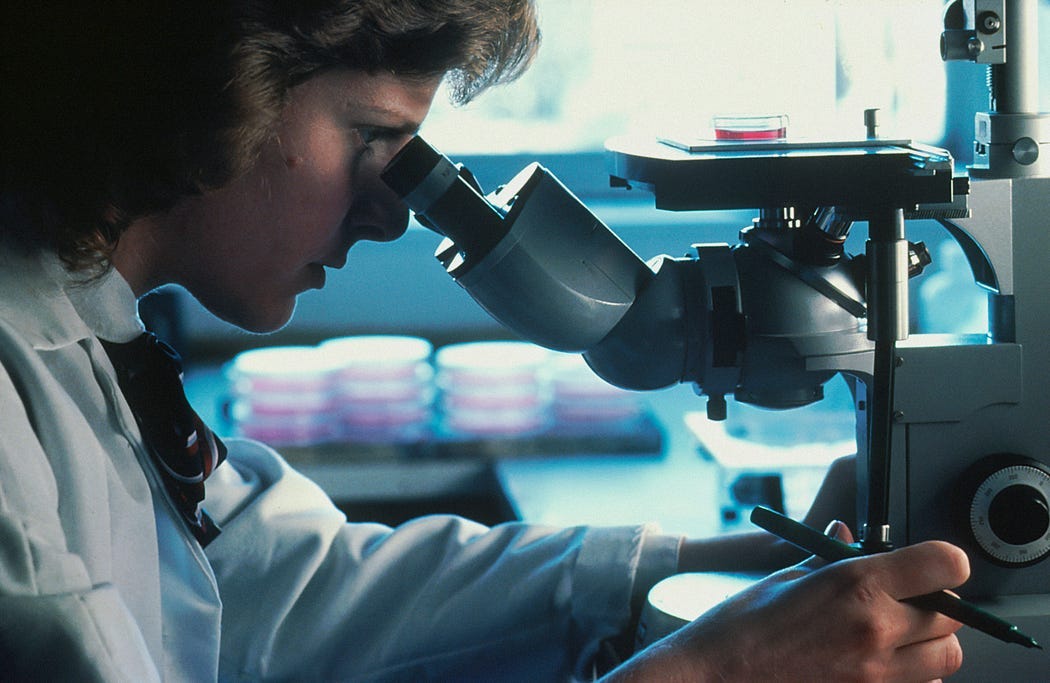
Photo by National Cancer Institute on Unsplash
In the early days of podcasting, some enterprising print magazines, such as PC Magazine and Bloomberg Businessweek, produced podcasts that lent legitimacy to the fledgling industry.
As podcasting has grown, the print magazine industry has been co-opted by its digital counterparts, and struggles mightily in a world where the smartphone has become the interface for information transfer.
That’s why I love Science Magazine and Science Magazine Podcast.

Each week on the Science Podcast, host Sarah Crespi delves into the latest scientific discoveries with researchers and news writers from around the globe.
The podcast is designed like a print magazine, with each episode containing several distinct stories.
The publisher of Science Magazine is The American Association for the Advancement of Science (AAAS), which publishes the Science family of journals, including Science, Science Signaling, Science Translational Medicine, Science Advances, Science Immunology, and Science Robotics.

AAAS is an international organization serving 262 affiliated societies and academies of science, representing over 10 million individuals.
The organization focuses on promoting scientific freedom, enhancing science education, conducting science policy analysis, fostering international collaboration, and building trust in scientific information.
Let’s face it, that is desperately needed in the U.S. now.
The American Association for the Advancement of Science (AAAS) is the world’s largest multidisciplinary scientific society, dedicated to advancing science, engineering, and innovation for the benefit of all people. Founded in 1848, it is a non-profit organization that publishes the renowned peer-reviewed journal Science and advocates for science policy, education, and international cooperation.
The host of the podcast, Sarah Crespi, has been interviewing scientists and science writers weekly since 2011.

She has a BA in biology from Reed College and a master’s in journalism from the Knight Center for Environmental Journalism at Michigan State University. Among her many roles at Science, she has also served as director of multimedia, leading video and audio projects for the magazine.
Her previous jobs include: zookeeper, clinical cytogenetics lab technician, and barista. In her spare time, she mediates cat fights, walks her dog, and ferries her young daughter to various activities.
The show has produced well over 600 episodes and is a well-oiled machine. The show has an NPR vibe to it, and that’s a good thing, in case you were wondering. Crespi is a terrific host who may have a scientific brain but also displays a wry wit and self-deprecating humor. In the episode that included a segment on football helmet technology, Sarah Crespi and Staff Writer Adrian Cho talked football, with Crespi admitting her knowledge of football is severely limited by, well, interest!
But the episode told a fascinating story of how new technology is improving the football helmet. Adrian Cho explained that NFL concussions are down significantly from their high point in 2017, with new helmets a major factor. New 3D-printed materials for helmets, slots cut into helmets for more flex, and softer, more pliable materials have all improved head trauma safety for NFL and amateur players.

They conclude that better materials and testing have led to fewer concussions and chronic traumatic encephalopathy in players, with plenty of room for improvement. At one point, Cho explains that a drill run by football coaches was exposed as a major contributor to head trauma, and that drill has been eliminated in most programs.
An episode emblematic of the show is the October 20, 2025, show, where they discuss the mysterious fate of Europe’s Neolithic farmers. They arrived from Anatolia around 5500 B.C.E. and began farming fertile land across Europe. Five hundred years later, their buildings, cemeteries, and pottery stopped showing up in the archaeological record, and mass graves with headless bodies started to appear across the continent. Contributing Correspondent Andrew Curry talks with host Sarah Crespi about what this strange transition might mean.
In that same episode, and for a complete change of pace, Editor for Life Sciences Sacha Vignieri discussed recent dog research published in Science, including tracing the movement of dogs alongside ancient human populations, examining when dogs first diversified, and probing the relationship between modern dogs’ breeds and their dispositions.
To me, Science Magazine Podcast is a welcome throwback to the early days of podcasting. There are no celebrities, no fanfare, and no ads. Just well-researched science about a wide range of topics. If you enjoy science and haven’t bought into the RFK Jr. conspiracy theories, you will love this show.
**************************************************************************************
The Food Institute Acquires Heritage Radio Network’s Food & Beverage Podcast Assets
The Food Institute (FI) has announced the acquisition of a portfolio of food and beverage–focused podcast assets from Heritage Radio Network (HRN), marking a strategic expansion of The Food Institute’s multimedia platform and strengthening its position as the leading source of insights, analysis, and storytelling across the global food and beverage industry.
The transaction includes over 30 established podcast properties covering topics ranging from food entrepreneurship and culinary innovation to CPG product insights, hospitality trends, and the evolving consumer landscape. These programs will be integrated into The Food Institute’s growing portfolio of content and media assets, reaching executives, operators, investors, innovators, and F&B enthusiasts across the food and beverage ecosystem.
“This acquisition accelerates our mission to inform and connect the food and beverage industry through high-quality journalism, data-driven insights, thought-provoking conversations, and compelling storytelling,” said Brian Choi, Managing Partner & CEO of The Food Institute.
“Podcasting has become a critical channel for industry leaders and insiders who want deeper context behind the headlines. By bringing these respected shows into The Food Institute’s platform, we are expanding our ability to deliver valuable conversations that matter to decision-makers across food and beverage.”

Founded in 2009, Heritage Radio Network built a reputation as a leading podcast platform dedicated to food culture, culinary entrepreneurship, agriculture, and hospitality. The selected shows within the transaction focus specifically on the business of food and beverage and have built loyal audiences of industry professionals and enthusiasts.
Under The Food Institute’s ownership, the podcast portfolio will benefit from expanded editorial resources, broader distribution, and deeper integration with the organization’s news, research, events, and digital media channels. The Food Institute plans to invest in new programming, enhanced production capabilities, and cross-platform storytelling designed to reach established industry executives, emerging innovators, investors, and also B2C audiences.
“Heritage Radio Network has always been committed to elevating conversations about the people and ideas shaping food and the culinary arts,” said Ronald C. Pruett, Jr., former Chair of the Board of Heritage Radio Network. “We’re pleased that these deeply focused and meaningful shows will continue to grow under The Food Institute’s leadership and reach an even wider audience within the industry.”
The acquisition reflects The Food Institute’s continued investment in multimedia journalism and industry intelligence as demand grows for accessible, on-demand analysis of the trends shaping the global food and beverage industry.
Podcast programming will continue uninterrupted, with future episodes distributed through The Food Institute’s digital platforms as well as major podcast streaming services.
Ear Worthy published this story — we typically do not write about acquisitions — for several reasons. We admire and support the objectives of the Heritage Radio Network (HRN). HRN Chairman of the Board Ronald Pruett, Jr, says: “HRN’s mission is to build a more sustainable world by shifting how we think about food. Through storytelling, we amplify voices, spotlight solutions, and inspire change that helps foster equity and environmental stewardship for all.”
We are 100% behind that goal. The Food Institute is a leading multimedia company founded in 1928 that provides food industry professionals with timely news, data, and trends. Based in NJ, it acts as a “single source” for insights on mergers, regulations, and market changes via daily newsletters, reports, and podcasts, serving industry leaders, manufacturers, and retailers. We are always supportive of open and honest communications. In addition, The Food Institute covers topics such as food safety, consumer trends, mergers, acquisitions, and food policy. With the present administration’s focus on deregulation, there’s no doubt that food safety is imperiled in the U.S.
Food safety is facing significant challenges due to federal funding cuts to monitoring agencies (FDA, USDA, CDC), increasing foodborne illness outbreaks, and complex global supply chains
Experts warn that reduced inspections, coupled with rising cases of contamination (e.g., Listeria, Salmonella), raise questions about the safety of the food supply.