
Suspicious Minds Podcast Launched Season Two: AI & The Apocalypse
ALSO... Secret Life Of Books & Three influential thought leaders in podcasting.

Suspicious Minds Podcast Launched Season Two: AI & The Apocalypse
If you have not heard or read about the dangers of AI, then you are either in a sweat lodge or an actual AI. We are going to remedy that right now.
Agoric Media and Wondermind have just released Season Two of Suspicious Minds: AI AND THE APOCALYPSE, which premiered on May 20. You can start with the trailer at the Suspicious Minds feed. Suspicious Minds is a two-time Webby Award-nominated podcast.
In Season one, Suspicious Minds revealed the lived truths behind AI psychosis, taking an empathetic approach — and a deeply-researched one as well. Co-hosted by brother academic luminaries Drs. Joel and Ian Gold, PhD (who coined the term “The Truman Show delusion”) and creator/director Sean King O’Grady, Suspicious Minds looked into the psychology and history of technology-induced psychosis dating back centuries.
In Season two, Suspicious Minds: AI and the Apocalypse, creator/director/host Sean King O’Grady guides listeners through conversations with experts across different fields: Joel and Ian Gold return from Season One to ask the question that bridges the two seasons: Is civilizational AI dread a form of collective psychosis, or something categorically different?
Dorian Lynskey provides the historical and cultural frame. James Cussen and Judith Wolfe introduce the philosophical and theological void underneath the contemporary conversation.
This limited series tells the story of what we are all facing right now in the intersection between AI and the apocalypse, and how apocalyptic thinking has affected the human mind since the dawn of civilization, over the course of eight episodes total.
From the United States using Anthropic’s AI Claude in its attacks on Iran to a decades-old true conspiracy about bunkers, Suspicious Minds: AI and the Apocalypse unveils the worlds of technology, politics, psychology, theology, history, and humanity in ways unexplored in media until now.
“Humans have been thinking about a catastrophic end to our species since we first started throwing paint on the walls of caves,” said host Sean King O’Grady. “Each generation believes it might be the last. But I keep wondering — in an era of compounding existential threats, environmental, nuclear, biological, now technological — if this time we might be right. What does it mean to be living through such a moment? And how do we face our own deaths while holding the prospect of the end of all human life? These are the questions we are asking this season — of philosophers, psychiatrists, historians, and the people actually building the technology that may one day harness the power to solve death, or kill us all.”
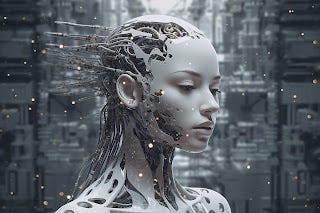
Suspicious Minds doesn’t content itself with simple solutions like technology is bad. Instead, it searches for the right balance between technology serving us and technology harming us. Social media and cell phone obsessions are two technologies that haven’t delivered on the promise of making society any better.
Season One of Suspicious Minds examined what happens when AI fractures individual minds. Season Two asks a harder question: what happens when it shatters our collective sense of the future?
This season is a meditation on life, death, and what it means to be alive in an age when humanity is creating something that those building it believes has the power to either end all life on Earth or turn our world into a utopia.
Check out Suspicious Minds. Are we delusional for trusting AI technology? Or has AI already warped our thinking patterns? Listen and get some answers.
***************************************************************************************
Secret Life Of Books: Exploring The Hidden Stories Behind Iconic Works
Book review podcasts can be compared to wines. Each has its own individual taste, but they are all essentially wines. Book review podcasts, well, review books, but every such podcast offers a twist on that familiar format. Or, at least, the good ones do.
Secret Life of Books is a good one indeed. It’s a weekly podcast hosted by Princeton English professor Sophie Gee and former BBC arts director Jonty Claypole, focusing on the hidden, often scandalous backstories of classic literature. It explores the “hidden stories” behind iconic works—including their creators’ motives and cultural contexts—to make classic books relevant to modern audiences.
The show highlights the clandestine motives, undeclared stakes, and scandalous backstories of books that people think they already know.
The secret sauce of the show is its conversations between Sophie Gee (a literary expert) and Jonty Claypole (a media creative), mixing high-quality research with humor. Don’t think stuffy and pedantic. Instead, think witty banter, clever insights, and opinions percolating for years.
The podcast covers a wide range of literature, such as analyzing the influences on Jane Austen or the archives of Toni Morrison. Bonus content includes special “crammer” episodes for students and romantic critiques of literary characters. Occasionally, the hosts perform live, in-person shows at bookstores and festivals.
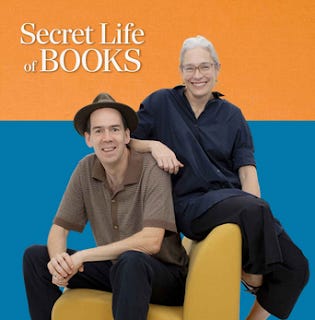
Sophie Gee is an English professor (formerly at Princeton University) and author, known for her work on literary criticism. “Every book tells a story. One it tells, and one it hides,” Gee explains.
Jonty Claypole is a former Director of Arts at the BBC and current CEO of Red Room Poetry.
The podcast was a recent winner at The NYC Podcast Awards and was chosen as the Audience Choice Winner. On LinkedIn, the hosts responded with: “The award is because of you, so a huge thank you to everyone who voted for us.”
One of my favorite episodes is The Other Bronte Girl: Anne Bronte’s Tenant of Wildfell Hall from February 24, 2025. The hosts tell us: “With all the fuss and fanfare around Wuthering Heights, we’re worried Emily Bronte is getting more than her fair share of attention. So today we shift the SLOB-light to her younger sister Anne, author of the remarkable The Tenant of Wildfell Hall, published in 1848. Anne wrote it in a whirlwind after the successes of Wuthering Heights and Jane Eyre, determined to prove herself a Bronte in talent and spirit.”
The hosts continue: “And though Anne is now the least celebrated of the Bronte trio, Tenant at the time of its publication, it was considered the most shocking in the Bronte collective oeuvre. Anne had fearlessly pulled back the veil on marital infidelity, domestic violence, alcoholism, and the systemic torments of Victorian masculinity and marriage laws.”
In the By George (Eliot) She’s Done It! The road to Middlemarch episode, the hosts exclaim that: “George Eliot’s Middlemarch is the Mount Everest of Victorian fiction. A book so brilliant and monumental that it’s taken us a year of planning to take it on. But as we close out 2025, we’ve established our Middlemarch base camp and started the climb.
“To put it another way, we’ve recorded an episode in which we treat listeners to the story behind the story of the greatness that is Mary Ann Evans, the woman who became George Eliot. Middlemarch is, in many people’s opinions, the greatest novel in English. To help understand why it’s so amazing, how Eliot learned to write like this, and her life as a reader, writer, daughter, and lover (plus, the story behind her pen name), we give you this primer episode.”
The podcast also began new subscriber-only episodes every two weeks about Middlemarch itself, going book by book through this magnificent classic. This is how Eliot meant Middlemarch to be read - through eight stages. One for each of the serialized volumes that ran through 1871 and 1872 before the book was published as a whole in 1874.
Secret Life of Books isn’t for every reader. Austen, Bronte, George Eliot -- not for everyone. What I enjoy about the show is that you can snack on incisive perceptions, startling conclusions, counterintuitive angles, with a side of attitude.
*********************************************************************************
This week’s Forbes article deals with three influential thought leaders in podcasting who also happen to be Podcast Hall of Fame inductees — James Cridland, Arielle Nissenblatt, and Tom Webster.